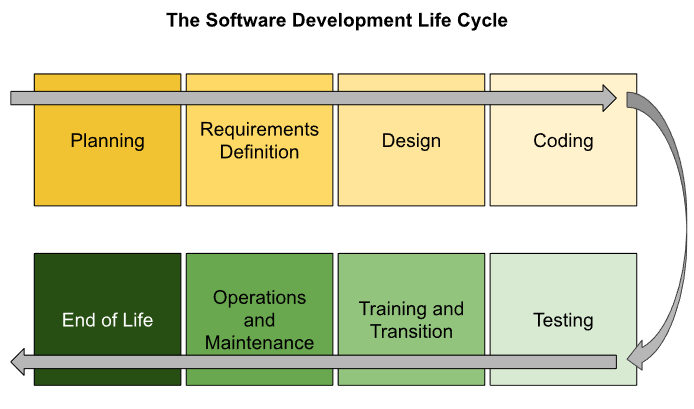
The Software Development Life Cycle (SDLC) is a structured process that guides software creation from initial planning through retirement. Its core value in security is ensuring that risks are addressed consistently, not as an afterthought. The most common SDLC phases include:
- Planning: Defining project goals, feasibility, and scope. In this phase, initial investigations into whether the effor should occur are conducted.
- Requirements definition: Identifying functional needs, with security requirements explicitly included. This phase happens once the effort has been deemed feasible.
- Design: Translating requirements into system architecture, integration points, and techniques, with security-by-design principles ensuring secure data flows and access controls.
- Coding/Implementation: Writing software with secure coding practices to avoid common vulnerabilities. This phase may involve testing minimal components, what is known as unit testing.
- Testing: Validating both functionality and security through static analysis, dynamic testing, and penetration tests. The whole solution is tested in integrated test. The final step from this phase, the User Acceptance Testing (UAT) determines whether or not the application as-is satisfies the user needs.
- Training and transition: Ensuring end users are familiar with the functionality and understand the secure use of the system. User’s expertise on the application is grown in this phase.
- Operations and maintenance: Monitoring applications for issues, patching vulnerabilities, and updating features securely while it provides its service to the user community.
- Decommissioning/End of life: Securely retiring applications and ensuring data is archived or destroyed appropriately.
 Image
Image